Three frames back, five forward
9 February 2026On the flicker structure of Benevolence
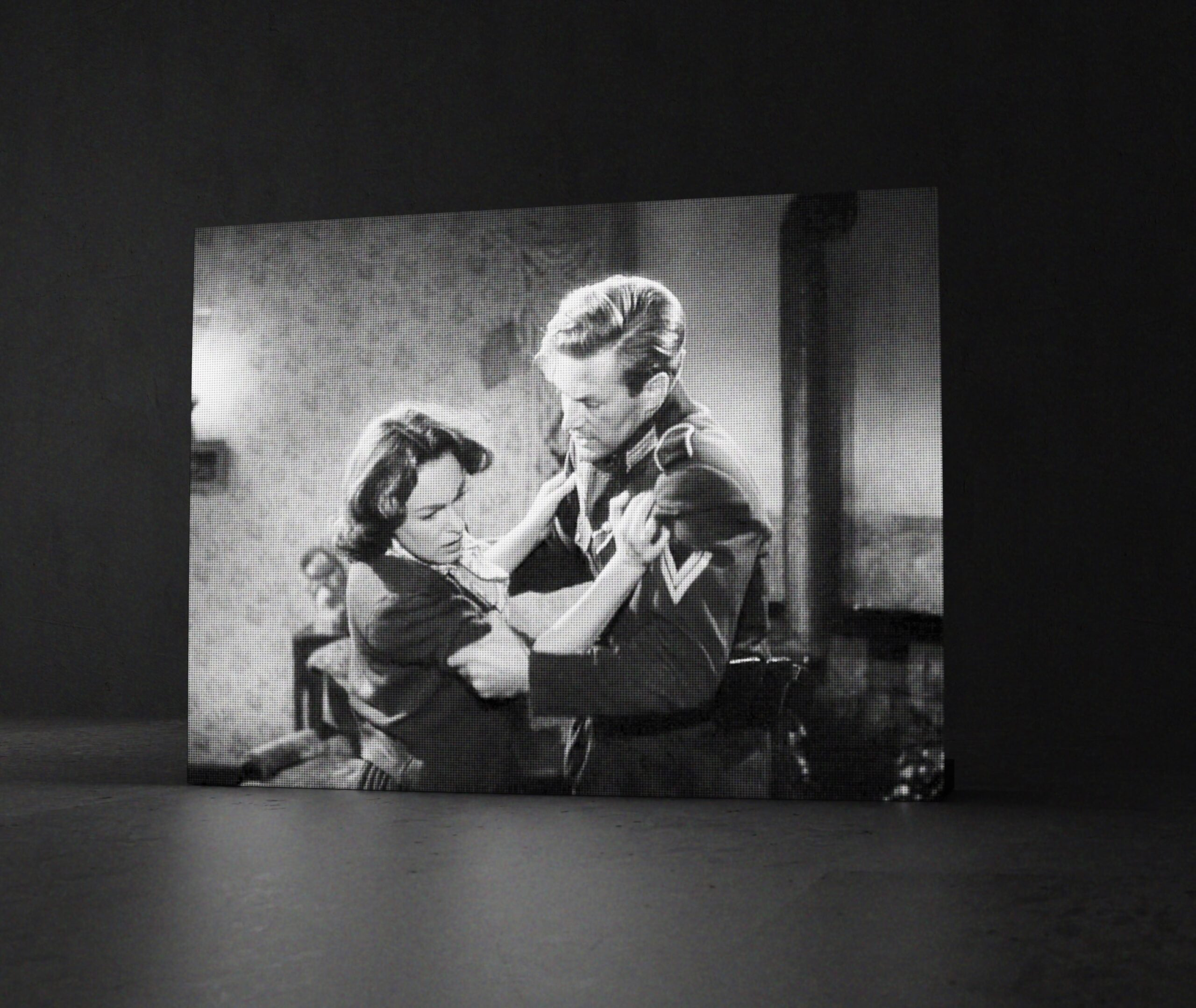
Benevolence changes shot every seven frames, a little under a third of a second. That number is quoted in every text about the film and it is slightly wrong, or rather it hides the part that matters. Each seven-frame segment is three frames repeated from the previous segment and five new ones. The film moves forward, but it keeps stepping back first.
I did that for the viewer, not for the rhythm. A straight cut every seven frames is a flicker you endure; the eye catches shapes and gives up. Three repeated frames give you a foothold in the image you just saw before the next one arrives, and the repetition inside the edit starts to rhyme with the repetition inside the scenes: a man steps in, a woman steps back, in film after film. Laura Mulvey wrote that to see cinema through delay is to discover the cinema that was always there. The three frames are that delay, built into the cut.
Sound went the same way. There was a plan for it, a sampled orchestral score cut to the same seven frames, with the dialogue of coercion underneath. When I tested it the film became almost impossible to watch. Not because it was louder or harsher, but because sound spent the time the three frames had bought: the ear took over and the movement, which is the whole argument, went by unseen. So the film is silent, and the silence is not an absence but the same decision as the repeated frames.
It also decided where the film lives. A silent loop needs no headphones, no acoustic room and no start time; it can share a wall with other work and run all day.